
Saadani National Park
Tanzania's only coastal national park, where savannah and mangroves meet the Indian Ocean, with Wami River boat trips and turtle beaches.
About Saadani National Park
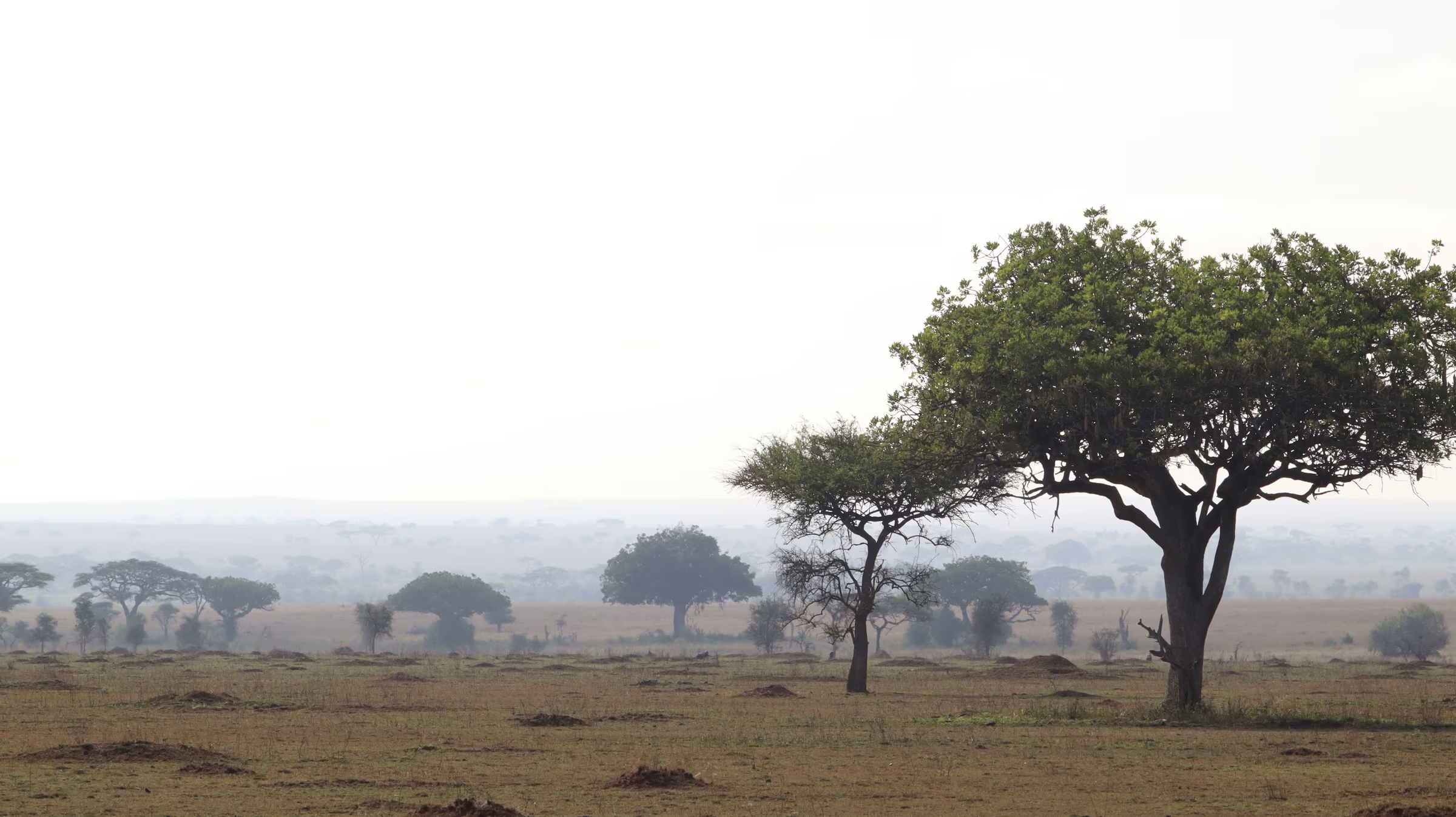
Saadani National Park is Tanzania's only coastal national park. Gazetted in 2005 and covering 1,062 km², it lies on the Indian Ocean about 44 km north of Bagamoyo, spanning Pwani and Tanga regions, and brings together open plains, miombo woodland, riverine vegetation, mangroves and beach.
Wildlife includes elephant, buffalo, lion, leopard, giraffe, hartebeest, wildebeest, eland, waterbuck, reedbuck, warthog and yellow baboon. Animals are fewer and can be shyer than in the northern parks, but sightings have increased since the area became a national park. Birdlife is rich, with woodland, river and mangrove species joined by sea birds and waders along the shore.
The Wami River winds through mangroves in the south of the park and is explored by boat, with hippos, crocodiles and many water birds. Green turtles nest on the park's quiet beaches, and inside the park Saadani fishing village has ruins from its 19th-century days as a major trading port.
Saadani is close to Dar es Salaam, Bagamoyo and Zanzibar, which makes it a practical way to combine a short safari with time on the coast.
Quick facts
- Location
Pwani and Tanga regions, on the coast about 44 km north of Bagamoyo
- Size
1,062 km²
- Established
Gazetted as a national park in 2005
- Best time to visit
Open all year; game is easiest to see in the drier months of June to October and January to February
- Getting there
By road from Dar es Salaam via Bagamoyo or Chalinze, or a short light-aircraft flight from Dar es Salaam or Zanzibar
- Known for
Beach and bush in one park, Wami River boat trips and green turtle nesting
When to go
Saadani is warm and humid all year, cooled by onshore breezes for much of it. The park is open all year, and game is usually easiest to see in the drier months of June to October and January to February. During the rains of March to May and November to December some parts of the park become inaccessible, and a 4x4 vehicle is recommended.
Getting there
From Dar es Salaam by road: one route runs north via Bagamoyo, with the park about 44 km beyond the town, reached through the Wami River area. The alternative goes inland via Chalinze to Mandela village, about 271 km from Dar es Salaam, followed by about 61 km of rough road to the park gate. Road conditions change with the seasons, so check the current route before setting off.
By air: scheduled and private light aircraft serve the Saadani airstrip, so check current schedules with the airlines; the flight from Zanzibar takes about 15 minutes.
From Tanga: drive south, crossing the Pangani River by public ferry; the park gate is about 130 km away on gravel roads, around three hours' drive.
By boat: boat transfers can be arranged from Dar es Salaam, Bagamoyo, Pangani, Tanga and Zanzibar.
Tanzania's most important turtle beach
Saadani's undisturbed beaches are a favoured nesting site for green turtles, and Tanzania National Parks describes them as the most important turtle breeding site in the country.
Questions travellers ask
Yes, swimming in the sea is one of the park's activities, but swim only in designated areas and watch for currents. Never swim in the Wami River, which has crocodiles and hippos.
No. Animals are fewer and can be shyer than in parks such as the Serengeti, although sightings have increased since Saadani became a national park. The appeal is the mix of game drives, river trips and beach in one place.
Yes. The flight from Zanzibar to the Saadani airstrip takes about 15 minutes, which makes even a short visit practical. Check current schedules with the airlines, as services change.
A fishing village inside the park, with ruins that date from its 19th-century role as a major trading port. It can be visited during a stay in the park.
Travel essentials
Saadani is a quiet park with few visitors. All wild animals are potentially dangerous, so stay in the vehicle on game drives unless your guide says otherwise, and walk only with a ranger. Hippos and crocodiles live in the Wami River and estuary: never swim in the river, keep away from the banks, wear a life jacket on boat trips and follow the guide's instructions.
Swim in the sea only in designated areas and watch for currents, and do not disturb turtle nesting sites. Some parts of the park become inaccessible in the rains, when a 4x4 vehicle is recommended.
Malaria is present throughout Tanzania below 1,800 m, including the whole coast, so ask about antimalarial tablets and use insect repellent, long sleeves and a mosquito net. A yellow fever vaccination certificate is required for travellers aged one year and over arriving from a country with a risk of yellow fever transmission, including after an airport transit of more than 12 hours in such a country. Avoid swimming or wading in fresh water such as rivers and lakes because of the risk of schistosomiasis. Hepatitis A and typhoid vaccines are commonly recommended, and you should drink bottled, boiled or filtered water. Speak to a travel health clinic 6–8 weeks before travel.
Keep valuables in your lodge safe and carry a copy of your passport. If you travel via Dar es Salaam, keep bags close, as bag snatching by thieves in cars or on motorbikes is a known risk there. Avoid driving outside towns after dark, and book trips through reputable, licensed operators rather than touts.
Take out comprehensive travel insurance that covers medical treatment and emergency evacuation, including by air from remote areas. Make sure it also covers any boat trips or water activities you plan to do. Tanzania also requires non-resident visitors to buy a mandatory inbound travel insurance policy at their first point of entry: from the National Insurance Corporation if you arrive on the mainland first, or from the Zanzibar Insurance Corporation if you arrive in Zanzibar first. Other policies are not accepted for this requirement, and you may be refused entry without it, so you still need your own insurance for your individual needs. Check the current rules before you travel.
The national emergency number in Tanzania is 112 (police, fire and ambulance).
Ambulance services are limited outside the main cities, so in the park your guide, lodge or the park rangers are usually the quickest source of help.
Nearest hospitals: Bagamoyo District Hospital in Bagamoyo and Bombo Regional Referral Hospital in Tanga. For serious cases, the main hospitals are in Dar es Salaam, including Muhimbili National Hospital and the Aga Khan Hospital.
Keep your insurer's 24-hour assistance number with you.
Plan a trip to Saadani National Park
We’ll help you choose the route, the pace and where to stay.
Let’s Plan Your Tanzania Story
Tell us a little about your dream trip. Our team will help turn your ideas into a safari designed around you.